The Aural Aesthetics of Ghosts in BBC Ghost Stories – Part 4 (Music).

Part 1. Part 2. Part 3. Nondiegetic Musical Themes And Textures. “Indeed, the celestial voices of film music do resemble a phantom in several significant ways.  They are ephemeral, they are not ‘substantial’ or do not constitute part of what audiences cognise as important in the film, and have an effect that is not apparent.” – Donnelly (p.8, 2005). Though looking at nondiegetic scores for … Continue reading The Aural Aesthetics of Ghosts in BBC Ghost Stories – Part 4 (Music).

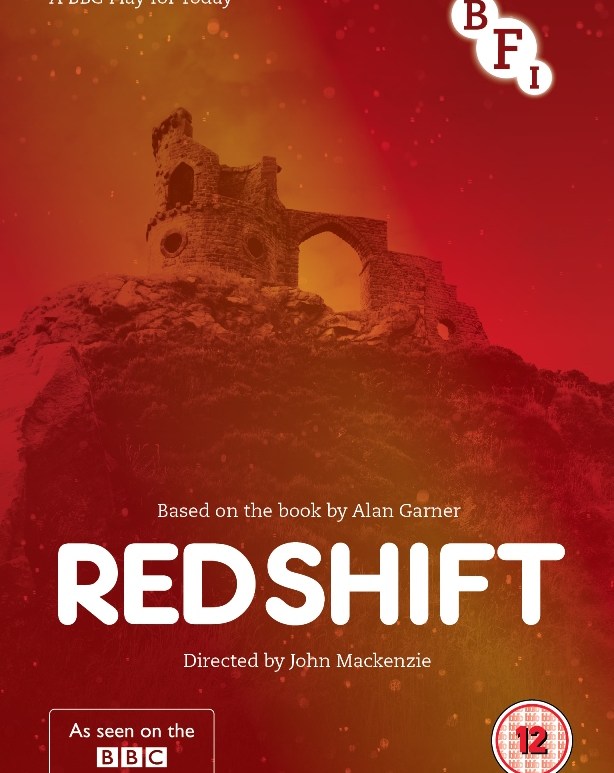
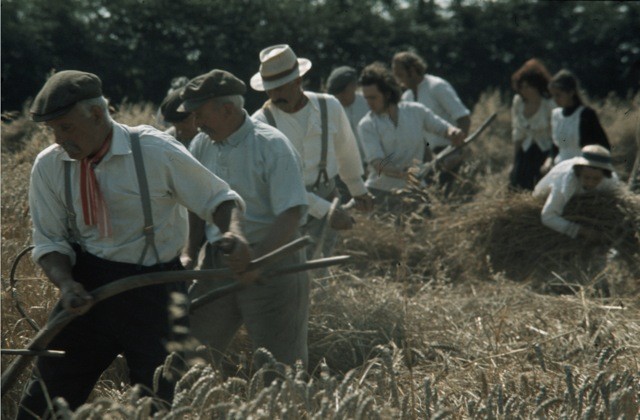
Red Shift (Play For Today, 1978) – John Mackenzie (BFI).

A shifting sense of time, space, and place can bring huge advantages to fantastical works of fiction.  The feeling that time is a folded concept, repeating and resetting in a quasi-ritualistic ceremony of life adds a sheen of the monumental to even the smallest and most intimate of dramas.  This sheen is the absolute embodiment of the work of writer, Alan Garner, and is never … Continue reading Red Shift (Play For Today, 1978) – John Mackenzie (BFI).

The Aural Aesthetics of Ghosts in BBC Ghost Stories – Part 3 (William Ager).

Part 1. Part 2. A “Disembodied Voice” of some form is a clear norm for representing a creature that, by its very definition, is now bodiless.  This means that, as an aural technique, it is used frequently throughout many other ghost stories as well.  In Lawrence Gordon Clark’s films, the aural trait occurs several times with different and varying effects, though never with the layered … Continue reading The Aural Aesthetics of Ghosts in BBC Ghost Stories – Part 3 (William Ager).

The Folk Horror Chain

The Folk Horror Chain The following is a rough transcript of a paper delivered at the A Fiend in the Furrows conference, held at Queens University, Belfast on the 20th of September, 2014. Introduction Folk horror is a strange form of media. There’s an unusual craving for defining and canonising in spite of being a sub-genre which seems inherently intuitive. This unusual combination of shared thematic … Continue reading The Folk Horror Chain

The Aural Aesthetics of Ghosts in BBC Ghost Stories – Part 2 (The Disembodied Voice).

Part 1. The Aural-Thematic Ties In BBC Ghost Stories. “He first began to write the ghost stories for which he is now famous in late 1892 or early 1893 while he was a fellow of King’s.  They were composed initially to be read aloud in his college rooms as a Christmas treat for his friends.”-  Oliver (p.15, 2012). When looking at the source material for … Continue reading The Aural Aesthetics of Ghosts in BBC Ghost Stories – Part 2 (The Disembodied Voice).

The Aural Aesthetics of Ghosts in BBC Ghost Stories – Part 1 (Introduction).

Manifesting The Supernatural: The Aural Aesthetics Of Ghosts In BBC Ghost Stories. Introduction. “When Monty first began to write them, with the intention of inducing a pleasing terror in his listeners, he did so as an avid and discerning reader and connoisseur of the genre, keenly aware of his precedents and of the characteristics, objectives, and limitations of the ghost story as he understood the … Continue reading The Aural Aesthetics of Ghosts in BBC Ghost Stories – Part 1 (Introduction).

The Music of Folk Horror – Part 8 (Conclusions).

Part 1. Part 2. Part 3. Part 4. Part 5. Part 6. Part 7. Conclusions From the analysis of only a handful of British folk horror films, it has been shown that they rely heavily on their music in order to achieve their full cinematic effect.  Altman states the following when discussing genre theory: “Constantly opposing cultural values to counter-culture values, genre films regularly depend on … Continue reading The Music of Folk Horror – Part 8 (Conclusions).

The Uncanny in Häxan: Witchcraft Through The Ages (1922)- Benjamin Christensen.

In one of the first attempts I made at canonising the sub-genre of Folk Horror, I likened the majority of its films to be brilliant but mere fugues on the ideas presented in Benjamin Christensen’s Häxan: Witchcraft Through The Ages (1922).  Outside of Victor Sjöström’s The Phantom Carriage (1921), it was the earliest and most explicit form of the sub-genre that seemed to be surviving … Continue reading The Uncanny in Häxan: Witchcraft Through The Ages (1922)- Benjamin Christensen.

The Music of Folk Horror – Part 7 (Musical Anachronisms).

Part 1. Part 2. Part 3. Part 4. Part 5. Part 6. Musical Anachronisms – Naturally and Overtly. “Let’s just say there aren’t many films set in the reign of William and Mary in which the devil rebuilds his body by harvesting the skin of children…” (Gatiss, 2010, BBC). To address the presence of musical anachronisms in films of all types is a tricky subject … Continue reading The Music of Folk Horror – Part 7 (Musical Anachronisms).

Blackwood (2013) – Adam Wimpenny.

The ghost story has had a resurgence lately in film and television.  Perhaps the increasing reliance on distancing technology and social media has lead to a desire to retread older forms that now seem prescient but there’s no doubt that the genre as a whole is alive and well, especially for commercially minded lower budget film; the blueprint set up by Hammer’s adaptation of Susan … Continue reading Blackwood (2013) – Adam Wimpenny.