Distant Voices, Still Lives (Part 4) – Communal Singing and Domestic Abuse.

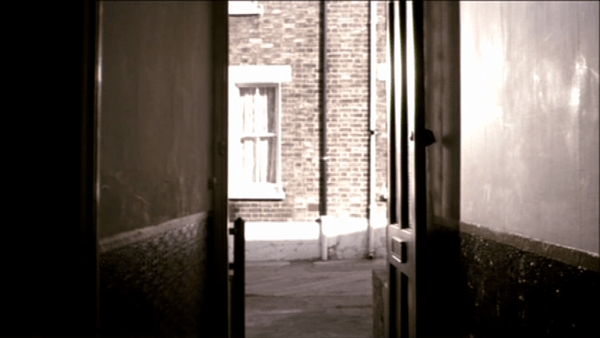
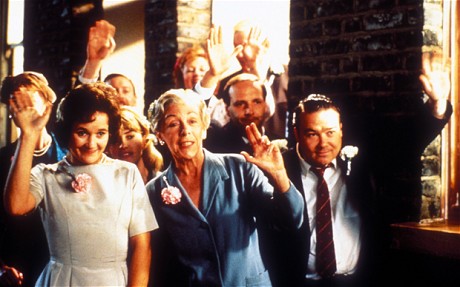
Part 1. Part 2. Part 3. Part 4. Part 5. Part 6. Part 7. Communal Singing of Popular Music. “Song lyrics threaten to offset the aesthetic balance between music and narrative cinematic representation. The common solution taken by the standard feature film is not to declare songs off limits – for they can give pleasure of their own – but to defer significant action and … Continue reading Distant Voices, Still Lives (Part 4) – Communal Singing and Domestic Abuse.


David Lynch’s Musical Formations of Cinematic Ideas (The Big Dream).

David Lynch has a very clear and obvious interest in music. This interest finds its way into his films via a number of different methods and often build upon the director’s main recurring themes and ideas. What makes David Lynch distinct from other American directors with interests in music such as Martin Scorsese and Woody Allen is that Lynch’s interest has peaked at a point … Continue reading David Lynch’s Musical Formations of Cinematic Ideas (The Big Dream).

Two Years At Sea (Ben Rivers) – Geographical Solitude and Company in Objects.

Cause and effect may not perhaps be the first aspect that comes to mind when considering Ben Rivers’ feature debut Two Years At Sea (2011). Yet, looking at the implications of the lifestyle on show, itself a deliberate effect of causation from working at sea for two years to be able to afford to live a more isolated life, there is a great sense of … Continue reading Two Years At Sea (Ben Rivers) – Geographical Solitude and Company in Objects.

Distant Voices, Still Lives (Part 3) – Music, Memory and Society.

Part 1. Part 2. Part 3. Part 4. Part 5. Part 6. Music, Memory and Society. Adorno and Eisler argue that: “As a matter of principle, priority goes to the truly novel musical resources. However, motion-picture music can also summon other musical resources of the most varied nature, on the condition that it reaches the most advanced contemporary modes of composing, which are characterized by … Continue reading Distant Voices, Still Lives (Part 3) – Music, Memory and Society.

Train to Train – Early Rhythms of Silent Film (Lumière and Keaton)

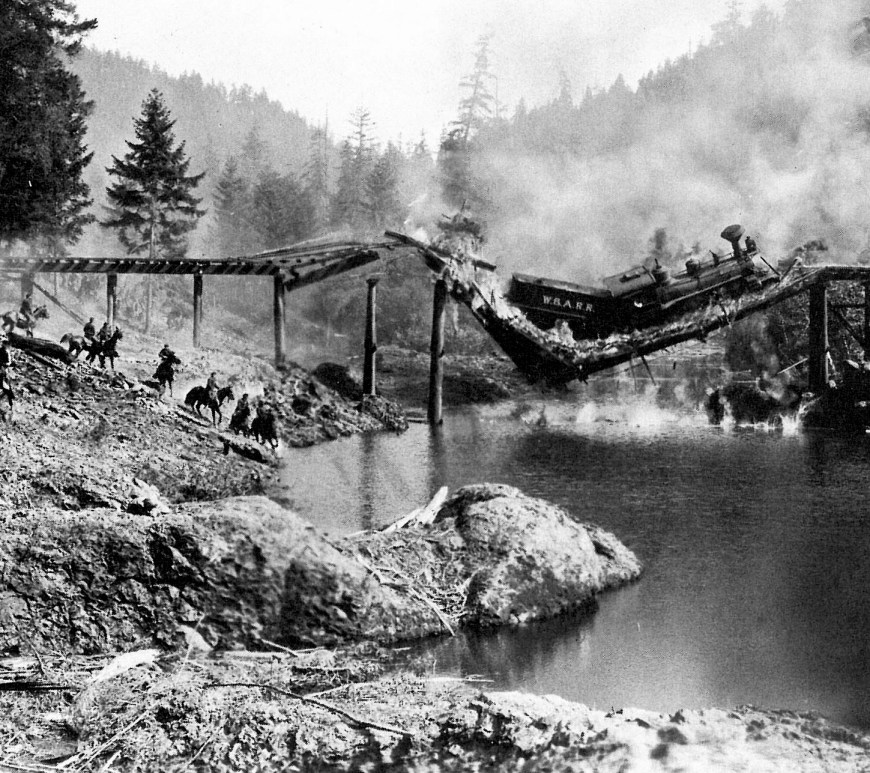
During the first quarter of film history, film language very quickly cemented itself into forms that would stay that way in mainstream cinema until the middle of the 20th century. Looking back at the surviving imagery of the first era of film (i.e. the silent era), it’s easy to see how these forms quickly solidified and became the norm for the typical and the innovative … Continue reading Train to Train – Early Rhythms of Silent Film (Lumière and Keaton)

Distant Voices, Still Lives – Sounds of the Past. (Part 2)

Part 1 Part 2 Part 3 Part 4 Part 5 The Sounds of the Past “To this inexorable, insidious awareness of your own dependence on your past, like an illness that grows even harder to bear, I gave the name “Nostalgia”…” (Tarkovsky, 1986, p.206) One of Distant Voices, Still Lives’ key differences to all that had gone before in the canon of British working class … Continue reading Distant Voices, Still Lives – Sounds of the Past. (Part 2)

Antichrist (Lars von Trier) and Handel’s Aria (Lascia ch’io pianga)

Lars von Trier’s recent film work often uses very specific musical cues within its narrative framework.  His visual style has developed very clearly beyond his self-imposed Dogma ’95 rulings, and his sound world also reflects this almost seismic change. Though music is equally as imposing in his 2011 Melancholia, the music used in his controversial 2009 film, Antichrist, sums up this sparse but very specific musical … Continue reading Antichrist (Lars von Trier) and Handel’s Aria (Lascia ch’io pianga)

Simon Killer (Antonio Campos, 2012) – Masters of Cinema.

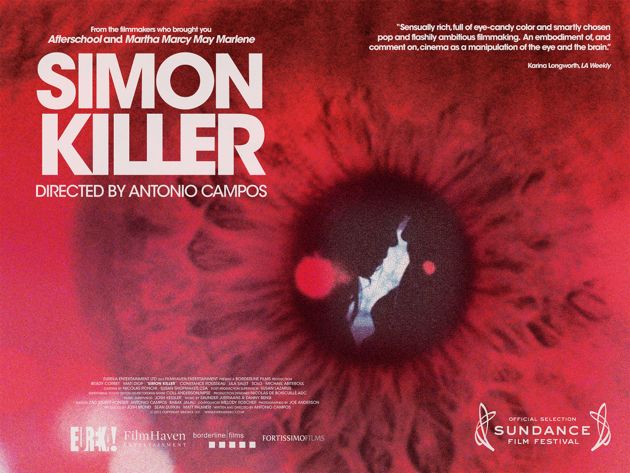
This review contains spoilers. Fluidity is rife within Antonio Campos’ 2012 film Simon Killer. From its character’s perception of reality to its editing and direction, the film seems in a constant state flux, moving in and out of ideas and emotions as easily as its sociopath protagonist. For a film with such a violent, blunt title, it almost betrays the melancholic, rarely visceral content of … Continue reading Simon Killer (Antonio Campos, 2012) – Masters of Cinema.

Interview with Pat Collins (Silence, 2012).

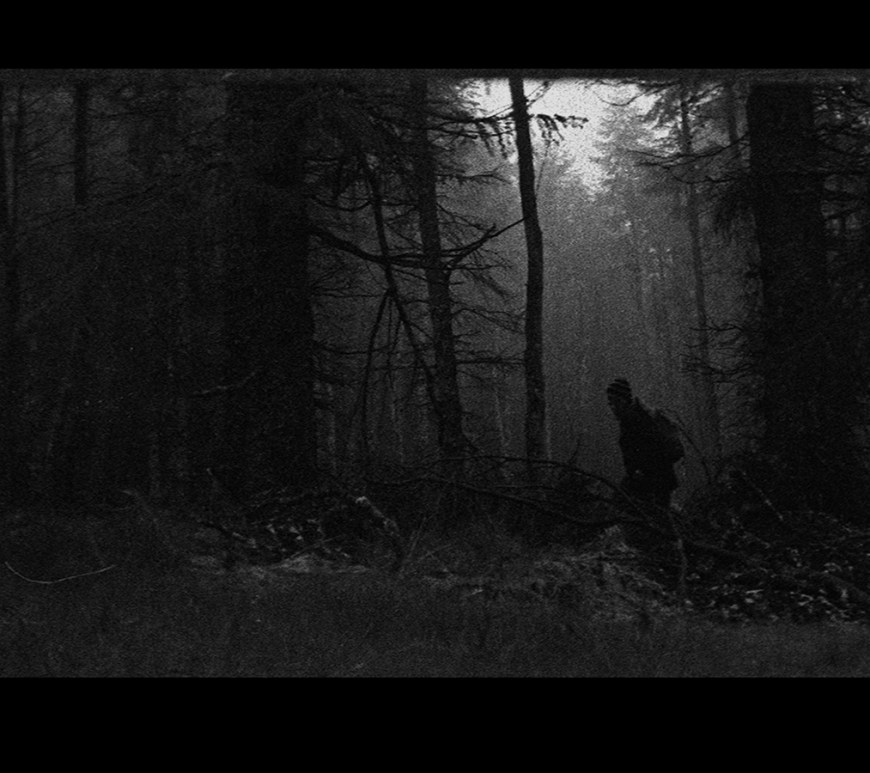
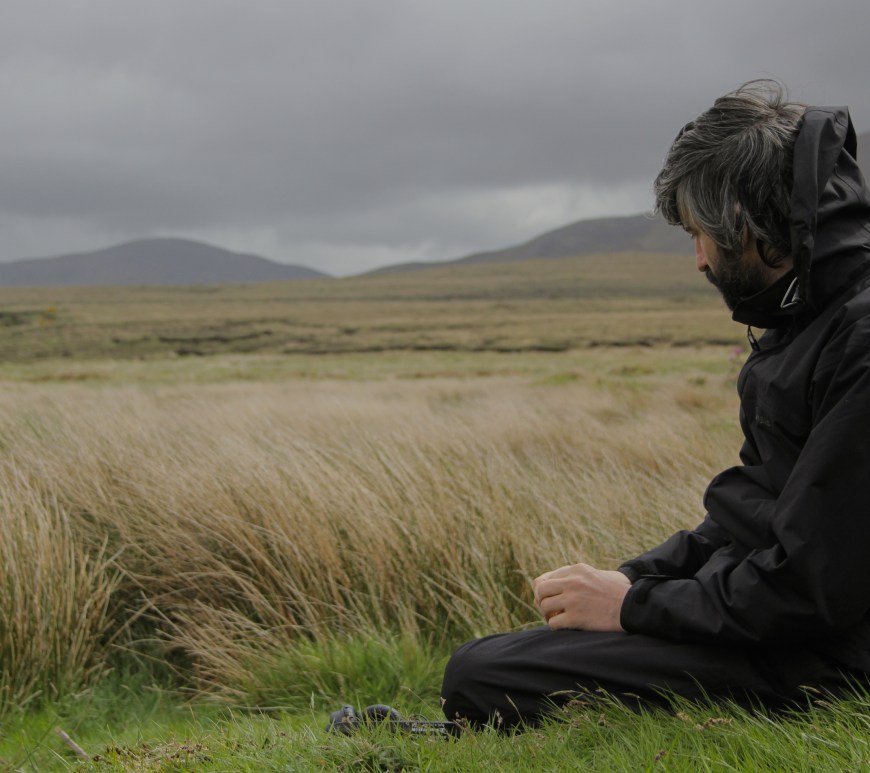
Pat Collins may perhaps be better known for his engaging documentaries but this year sees the release of his debut feature film in the UK.  Silence is a stunning debut film, full of philosophy, poetry and visual beauty.  The film shows a confidence within the new form as well as an expert use of layering different emotions and textures upon one another.  A full analysis … Continue reading Interview with Pat Collins (Silence, 2012).

Silence (Pat Collins, 2012) – Landscape and Nostalgia.

Nostalgia can manifest in many forms at the cinema.  Sometimes it can be overt, sometimes it can be unconscious but film is most definitely the medium to explore its inner workings.  A number of films have recently used sound, not just in an interesting way, but as a major part of the narrative and character focus whilst touching upon nostalgia.  These range from the superb … Continue reading Silence (Pat Collins, 2012) – Landscape and Nostalgia.